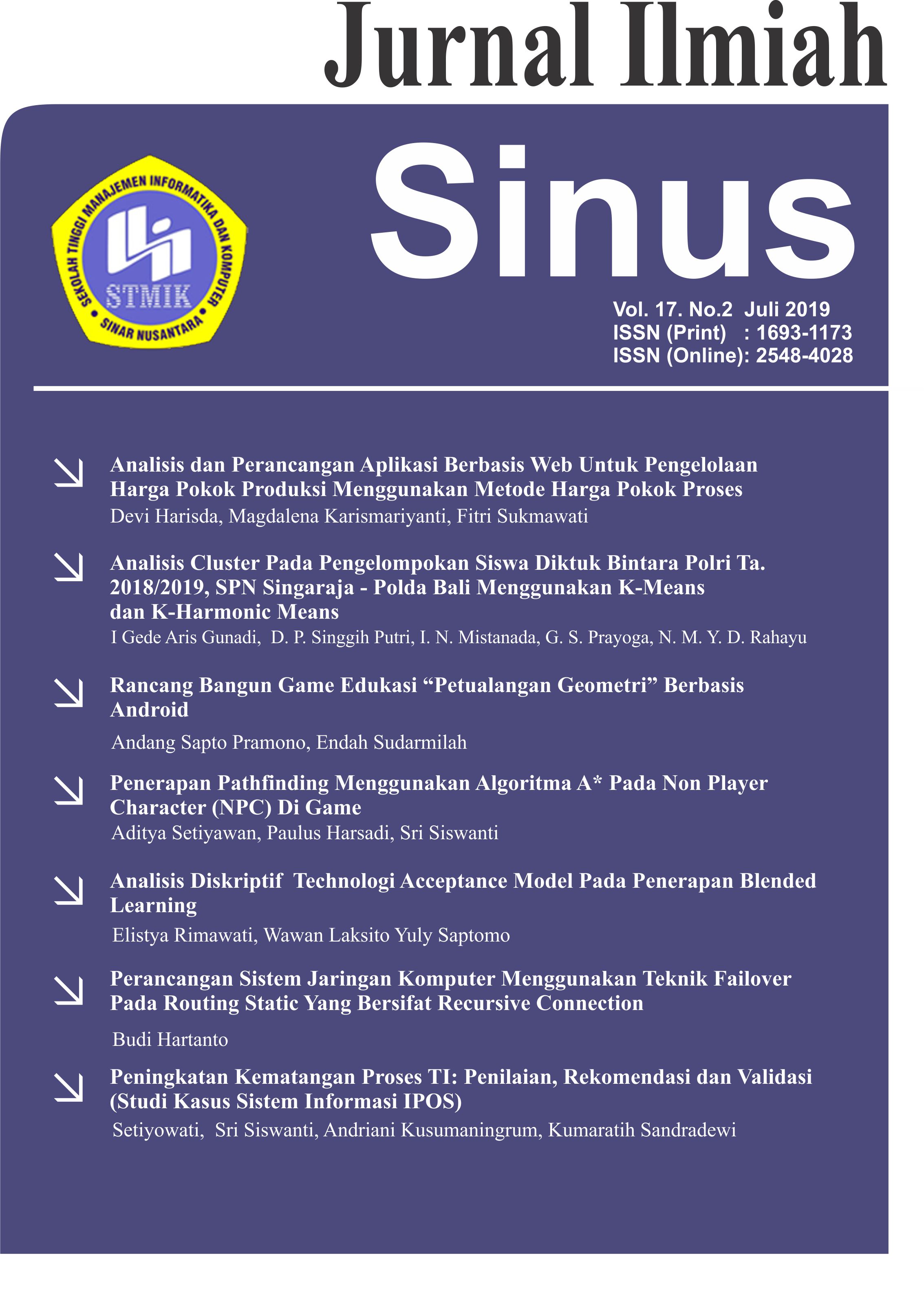
Analisis Diskriptif Technologi Acceptance Model pada Penerapan Blended Learning
DOI:
https://doi.org/10.30646/sinus.v17i2.420Keywords:
Blended Learning, Acceptance, TAM, Descriptive AnalysisAbstract
The Blended Learning learning model is a system that collaborates classroom face-to-face learning with online learning. This study aims to measure the acceptance of the Blended Learning learning model among students. The variables developed refer to the Technology Acceptance Model (TAM), which is a model of user acceptance of information systems. The data obtained were analyzed by descriptive statistics and qualitative analysis. The results showed that in general the use of the Blended Learning learning model could be accepted by students in the category of Good approaching is Very Good. The mean value of all aspects reached a value of 3.94 on a scale of 5 (79%). The results of qualitative analysis were in line with the results of quantitative analysis. Students received good use of e-Learning while maintaining face-to-face learning activities in class. The results of this study can be used as a basis for recommending the selection of learning methods in universities
References
Alharbi, S., & Drew, S. (2014). Using The Technology Acceptance Model In Understanding Academics’ Behavioural Intention To Use Learning Management Systems. International Journal of Advanced Computer Science and Applications, 5(1), 143–155.
Davis, F. D. (1989). Perceived usefulness, perceived ease of use, and user acceptance of information technology. MIS Quarterly, 13(3), 319–340. https://doi.org/10.2307/249008
Fatmawati, E. (2015). Technology Acceptance Model (TAM) Untuk Menganalisis Penerimaan Terhadap Sistem Informasi di Perpustakaan. IQRA’: Jurnal Perpustakaan Dan Informasi, 9(1), 1–13.
Husamah. (2014). Pembelajaran Bauran (Blended Learning). Jakarta: Prestasi Pustaka.
Librado, D. (2017). Analisis Penerimaan Mahasiswa Terhadap Sistem Informasi Akademik (SIAKAD) Dengan Metode Technology Acceptance Model (TAM). Jurnal SAINTEKOM, 7(2), 112–125.
Mutawa, A. M. (2017). Evaluation of Blended Learning in Higher Education : A Case Study. PEOPLE : International Journal of Social Sciences, 3(1), 881–889.
Poluan, F., Lumenta, A., & Sinsuw, A. (2014). Evaluasi Implementasi Sistem E-Learning Menggunakan Model Evaluasi Hot Fit : Studi Kasus Universitas Sam Ratulangi. E-Journal Teknik Informatika, Ratulangi, Universitas S A M Studi, Program Informatika, Teknik Teknik, Fakultas Ratulangi, Universitas Sam Kampus, Jl Bahu, Unsrat, 4(2), 1–6.
Purnomo, A., Ratnawati, N., & Aristin, N. F. (2016). Pengembangan Pembelajaran Blended Learning Pada Generasi Z. JTP2PS, 1, 70–77.
Saptomo, W. L. Y. (2018). Ragam Media Interaktif Dalam Pembelajaran. Semarang: BP-UNISBANK.
Sugiyono. (2012). Metode Penelitian Kuantitatif Kualitatif dan R&D. Bandung: Alfabeta.
Wijaya, M. (2012). Pengembangan Model Pembelajaran e-Learning Berbasis Web dengan Prinsip e-Pedagogy dalam Meningkatkan Hasil Belajar. Jurnal Pendidikan Penabur, 11(4), 20–37.
Downloads
Published
How to Cite
Issue
Section
Citation Check
License
Authors who publish with this journal agree to the following terms:
- Authors retain copyright and grant the journal right of first publication with the work simultaneously licensed under a Creative Commons Attribution License that allows others to share the work with an acknowledgement of the work's authorship and initial publication in this journal.
- Authors are able to enter into separate, additional contractual arrangements for the non-exclusive distribution of the journal's published version of the work (e.g., post it to an institutional repository or publish it in a book), with an acknowledgement of its initial publication in this journal.
- Authors are permitted and encouraged to post their work online (e.g., in institutional repositories or on their website) prior to and during the submission process, as it can lead to productive exchanges, as well as earlier and greater citation of published work (See The Effect of Open Access).
Â

This work is licensed under a Creative Commons Attribution-NonCommercial-ShareAlike 4.0 International License.