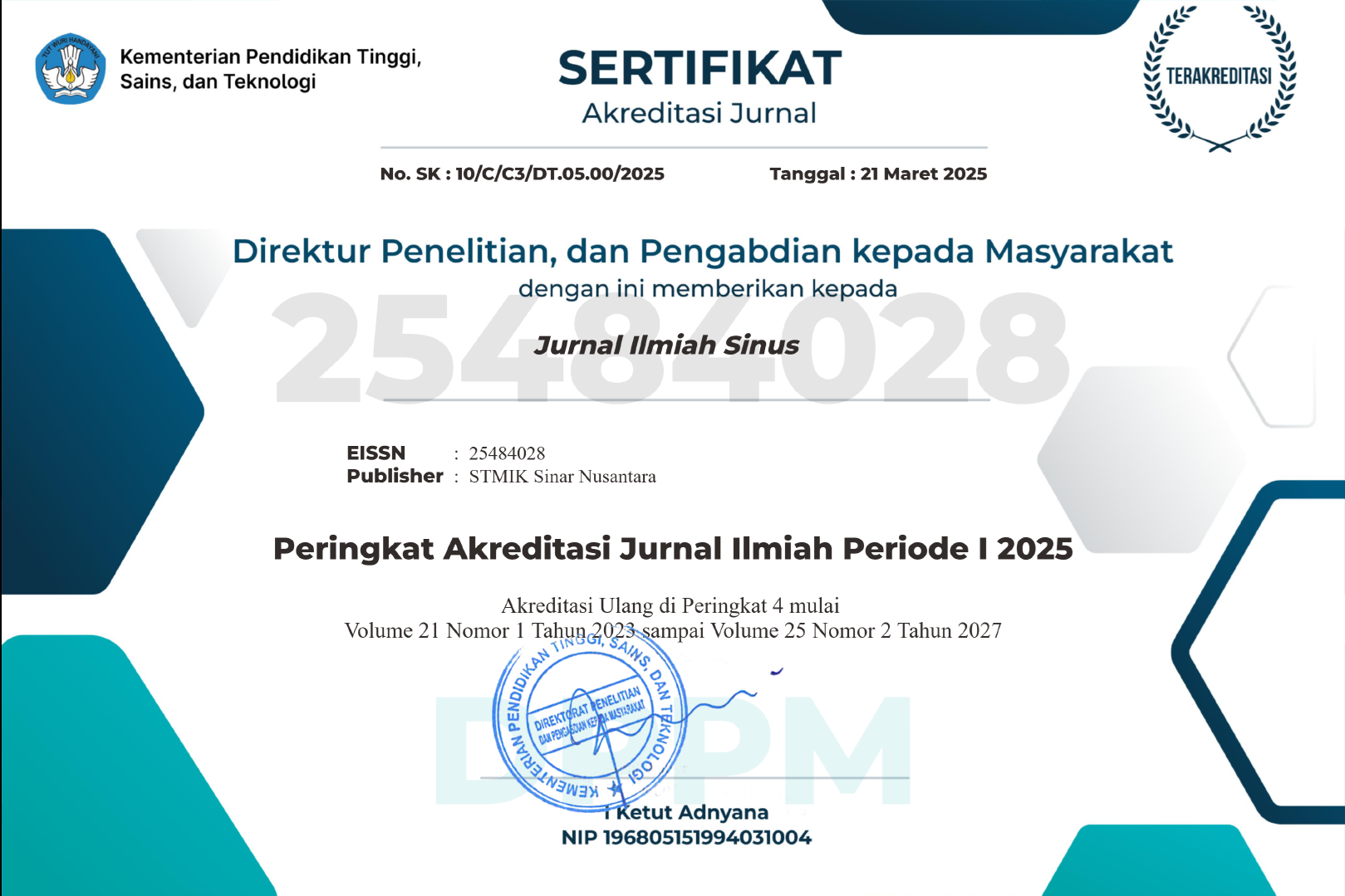
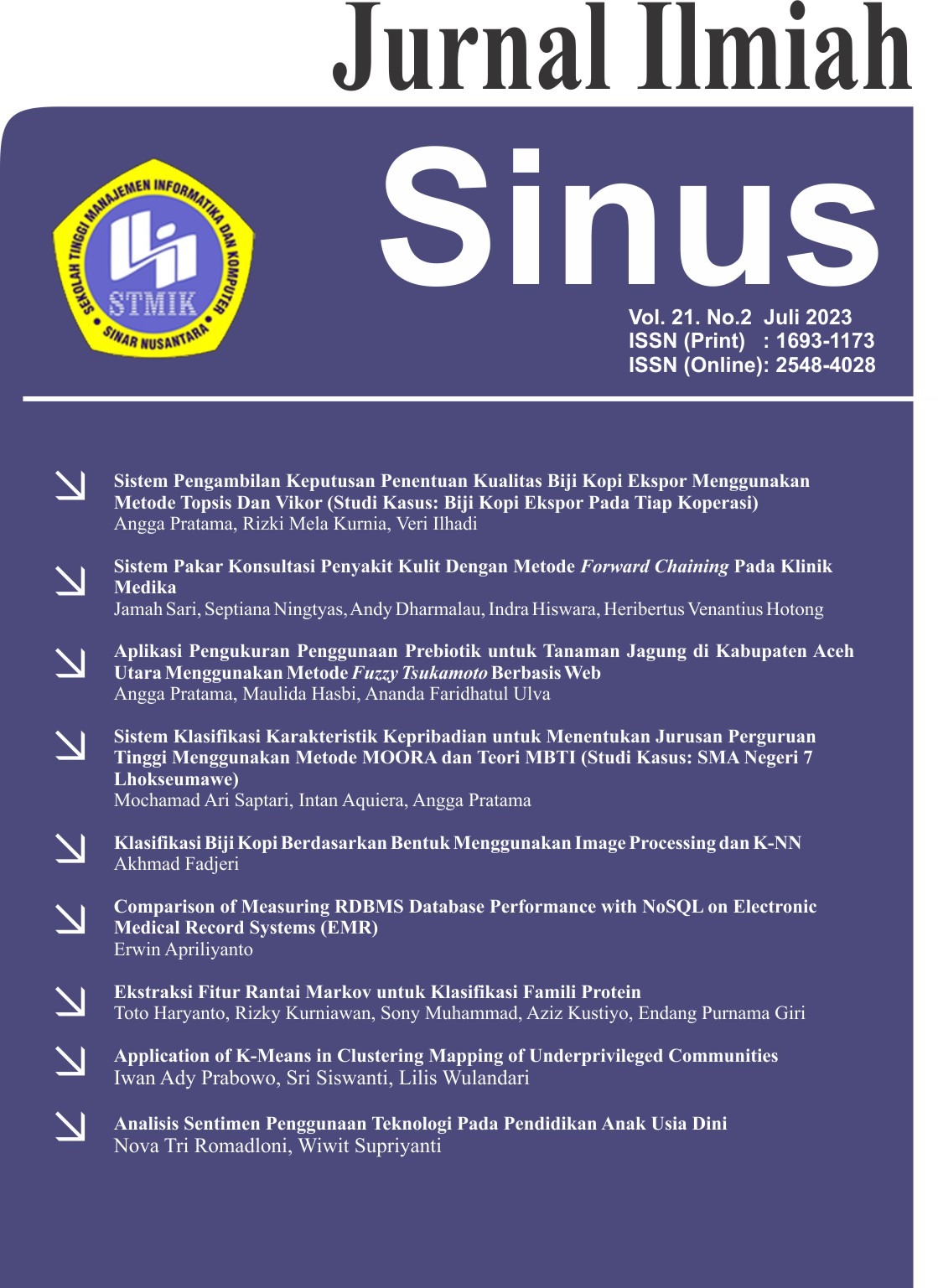
Comparison of Response Time Database RDBMS with NoSQL on Electronic Medical Records (EMR)
DOI:
https://doi.org/10.30646/sinus.v21i2.746Keywords:
NoSQL, MongoDB, PostgreSQL, ERMAbstract
The electronic medical record is a system for storing and managing patient medical data in electronic form. EMR replaces traditional medical record systems that still use paper, allowing doctors and other medical personnel to access patient medical records more quickly and easily from anywhere, as long as they are connected to the same network. In the EMR, patient medical data is stored in electronic format, such as text, images, and test results. EMR allows doctors to create patient medical records, make drug prescriptions, place laboratory orders and radiology orders, and access other patient medical data in one centralized system. EMR can also enable doctors to perform data analysis to gain insight into a patient's health condition and improve the treatment provided. In this study, the ERM database is used, with one database using PostgreSQL and the other using NoSQL. The purpose of this research is to test the speed performance of PostgreSQL and NoSQL with insert, select, and delete commands. Testing Method Using 1,000 records, 5,000 records, and 10,000 records, with each record being tested three times, and then taking the average, The results of this study are that the NoSQL database insert command has a speed of 3,900 times faster than the PostgreSQL database with 1,000 data records, whereas with 5,000 data records the NoSQL database is 471 times faster, while with 10,000 data records the NoSQL database is 355 times faster, and the select command for 1 NoSQL database table is 8 times faster than the PostgreSQL database, while for the above 1 PostgreSQL database table is faster.
Downloads
Additional Files
Published
How to Cite
Issue
Section
Citation Check
License
Authors who publish with this journal agree to the following terms:
- Authors retain copyright and grant the journal right of first publication with the work simultaneously licensed under a Creative Commons Attribution License that allows others to share the work with an acknowledgement of the work's authorship and initial publication in this journal.
- Authors are able to enter into separate, additional contractual arrangements for the non-exclusive distribution of the journal's published version of the work (e.g., post it to an institutional repository or publish it in a book), with an acknowledgement of its initial publication in this journal.
- Authors are permitted and encouraged to post their work online (e.g., in institutional repositories or on their website) prior to and during the submission process, as it can lead to productive exchanges, as well as earlier and greater citation of published work (See The Effect of Open Access).
Â

This work is licensed under a Creative Commons Attribution-NonCommercial-ShareAlike 4.0 International License.